
The Federal Reserve raised interest rates by a quarter point on Wednesday in the first change in monetary policy since Kevin Warsh became chairman in May.
The decision was expected and markets reacted cautiously with stocks largely unchanged while yields on government bonds fell slightly.
“The Federal Reserve’s decision to raise interest rates by 25 basis points reflects the reality that inflation remains too high,” Steve Rick, chief economist at TruStage, wrote. “Consumer prices rose 3.4% over the past year in August, still well above the Fed’s 2% target, while higher energy prices have created another source of inflationary pressure. The Fed is putting its foot a little more firmly on the brake to reinforce its commitment to price stability.”
Often the direction matters more than the amount when the Fed moves on rates and whether it is a one-and-done matter or a shift to looser or tighter policy. In a separate part of its announcement, Fed officials penciled in at least one more hike in 2026 and another in 2027.
“Economic activity is expanding at a solid pace,” the Fed’s statement in favor of raising rates, which was passed unanimously. “While uncertainty remains elevated owing, in part, to geopolitical developments, domestic spending has been resilient. Productivity growth is strong, and capital investment is robust. Job gains have kept pace with the workforce, and the unemployment rate has changed little.”
“Inflation remains elevated. Today’s policy action will support a timelier return to the Committee’s 2% goal,” the statement added. “The committee will deliver price stability.”
The Fed has been having a “family fight” over interest rates, to cite a favorite metaphor used by Warsh, with one to as many as three members of its monetary committee dissenting in recent votes. Meanwhile, President Donald Trump has advocated for lower rates even as inflation runs well above the Fed’s 2% target and yields on super-safe Treasuries have soared.
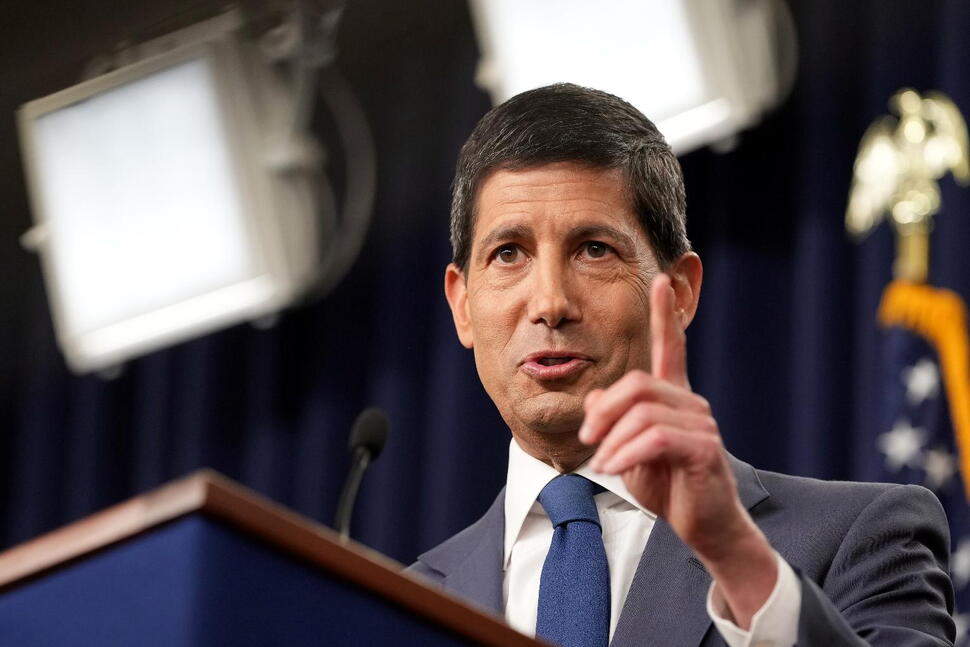
Speaking to the press after the Fed statement, Warsh said that the Fed cannot address individual prices such as those for gasoline or groceries.
“But what we can do and will do is ensure that any changes in relative prices don’t broaden out, don’t have second- and third-order effects on the economy,” he said. “That’s what we’re tasked to do, and that’s what we do.”
Still, raising rates will also put more pressure on consumers who have been battling higher prices since COVID-19 in 2020. But inflation has risen since Trump set off on his policy of sweeping import tariffs and, more recently, on account of Trump’s war against Iran and the resultant increase in oil prices.
“A shift back to policy tightening should reflect a growing concern at the Fed that inflation pressures are proving stickier than anticipated, with the renewed spike in oil prices in recent days likely to add to fears that a return to the central bank’s 2% inflation target could be delayed even further,” James McCann, senior economist at Edward Jones, wrote ahead of the meeting. “Moreover, with the economy continuing to deliver solid growth, an increasing number of Fed policymakers are likely to judge that interest rates are not restrictive enough at current settings, in our view.”
In many ways, the decision was a test for Warsh and the Fed’s credibility. Trump chose Warsh because of his statements about how he wants to approach monetary policy and Fed decision-making, with the expectation that the new chairman would be in favor of lowering interest rates. Markets were looking for Warsh to show some independence. Warsh actually said he prefers bond traders to be leading the Fed in terms of rates, and he got his wish with the 10-year Treasury reaching a yield of 5% – higher than in the last 19 years.
Tony Welch, chief investment officer at Signature FD, says that one cut is not likely to make much of a dent in inflation or offer a quick return to 2% inflation, so the question is what is the Fed’s strategy longer term – something Warsh would not say much about in his press conference.
“What we need to watch for is what this tightening cycle looks like,” Welch says, whether it is an “adjustment period” or a full turn toward a higher rate environment.
Markets gave their verdict, with the Dow Jones Industrial Average down more than 600 points for the day.