
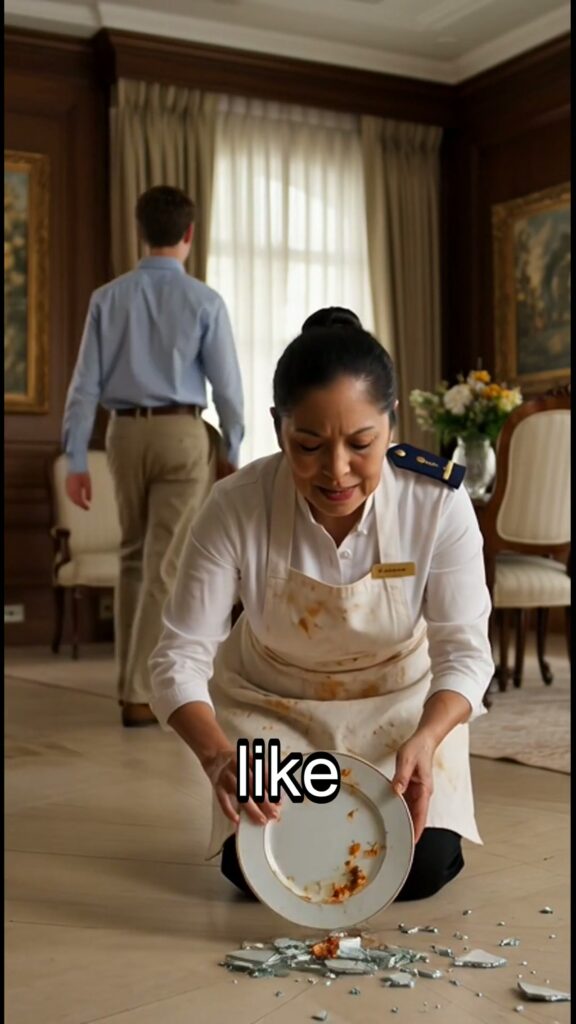
In the gleaming marble kitchen of the Rodriguez family’s $4.2 million Coral Gables, Miami mansion, a moment of childish cruelty would soon transform into an extraordinary lesson of human compassion. Twelve-year-old Alexander Rodriguez, the only son of tech entrepreneur Carlos Rodriguez, had no idea that his impulsive act of throwing a perfectly prepared dinner plate would uncover a deeply emotional narrative of maternal sacrifice that had been silently unfolding for over a decade.
A Family of Privilege
The Rodriguez family represented the pinnacle of Miami’s technological elite. Carlos Rodriguez, 45, had built a multi-million-dollar software company that revolutionized cloud computing. His wife Elena, a former international model, managed their extensive philanthropic foundations. Their only child, Alexander, had been raised in an environment of extreme privilege, attending the most exclusive private schools and wanting for nothing—except, perhaps, genuine understanding of human struggle.
Maria Hernandez, the family’s long-standing cook, had been with the Rodriguez household for over eight years. At 50 years old, she was more than just an employee—she was a silent guardian of the household’s daily rhythms. Her crisp white uniform and meticulously prepared meals were a testament to her professionalism and pride.
The Moment of Confrontation
That fateful evening, Maria had prepared a traditional Latin American dish that reminded her of home—a recipe passed down through generations, a culinary connection to her distant son. When Alexander dramatically threw the plate across the dining room, declaring the food tasted like “garbage,” Maria’s response was not anger, but a profound, almost imperceptible sadness.
“Some pain cannot be expressed through anger. It can only be felt in silence,” Maria would later reflect in a rare moment of vulnerability.
A Hidden Story of Sacrifice
What Alexander did not know was the extraordinary story behind Maria’s presence in their home. Ten years earlier, she had made the heart-wrenching decision to leave her own son in Honduras, sending him to the best school possible with money she earned working overseas. Each carefully prepared meal was a love letter to a child she could not hold, each recipe a memory of shared moments now distant and fading.
That night, after everyone had retired, the kitchen’s surveillance cameras captured a moment of raw, unfiltered emotion. Maria sat alone on the immaculate kitchen floor, surrounded by gleaming stainless steel appliances, holding a weathered photograph of a young boy—her son, now nearly Alexander’s age.
A Father’s Discovery
Carlos Rodriguez was a data-driven man, accustomed to analyzing complex information. When he reviewed the kitchen footage that evening, something fundamental shifted in his perception. The image of Maria—a woman who had been an integral part of their family’s daily life—weeping silently over a photograph struck him with unexpected force.
“In that moment, I realized we had been living alongside a story of incredible courage and love, and we had never truly seen her,” Carlos would later admit in a rare personal interview.
Unexpected Redemption
The next morning, instead of reprimanding Alexander, Carlos chose a different approach. He sat his son down and played the footage, allowing the raw emotional truth to speak for itself. For ten minutes, Alexander sat in stunned silence, the weight of his actions slowly sinking in.
Without prompting, the young boy walked into the kitchen and approached Maria. His apology was not rehearsed or formal, but genuine—a child genuinely understanding compassion for the first time. Maria’s response was to embrace him, her own pain momentarily dissolved by a child’s sincere remorse.
From that day forward, Alexander began helping Maria in the kitchen each evening, learning not just cooking techniques, but the profound stories and sacrifices behind every carefully prepared meal. What began as a moment of childish cruelty became an unexpected bridge of understanding, connecting two worlds that had existed side by side, yet never truly intersected.